Common Bottlenose Dolphin 3D Models as Reference for AI-Assisted Graphics
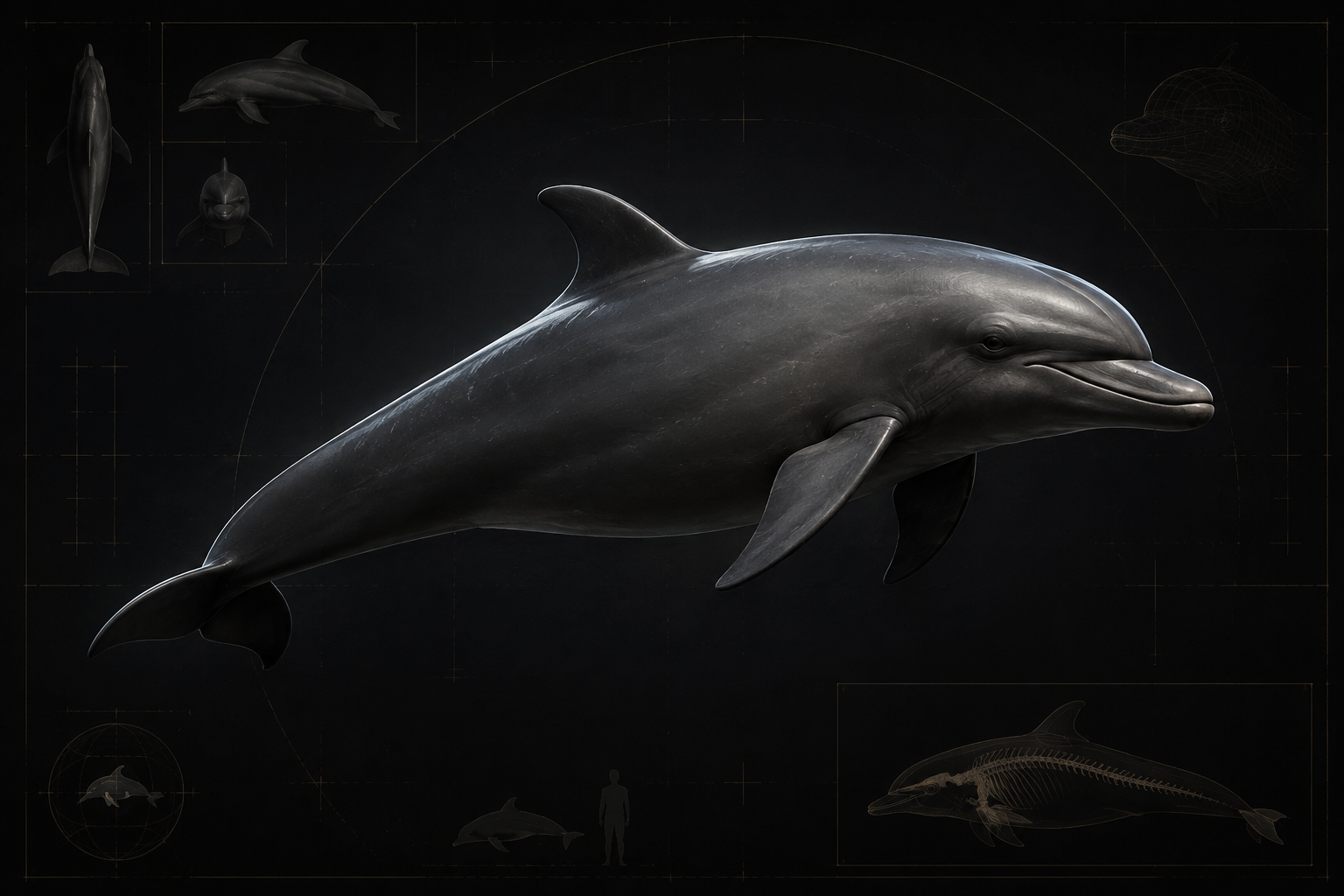
Why a 3D Dolphin Model Helps as Visual Reference
When AI-assisted graphics need a dolphin that reads clearly from a specific angle, a 3D model gives you a controlled starting point. Instead of prompting from memory alone, you can study the body arc, dorsal fin placement, beak shape, and tail fluke orientation from a defined view. That makes it easier to keep the silhouette coherent across iterations, especially when the goal is ideation for layouts, concept frames, or educational visuals rather than a final scientific diagram.
The Common Bottlenose Dolphin category is useful here because it offers a stable anatomical reference you can rotate mentally or within a workflow. The point is not to make claims about how AI systems are trained. The point is to use a structured reference object so that prompts, paintovers, and composition choices stay anchored to a consistent body form.
Control Camera Angle, Lighting, and Scene Blocking
A dolphin changes dramatically with viewpoint. A slight shift in camera angle can make the rostrum look longer, flatten the forehead, or hide the transition from torso to tail stock. Using a model as reference helps you decide which angle best supports the scene before you spend time iterating prompts. The same is true for lighting. Top light can clarify the dorsal contour, while side light can make the flank and fin planes more readable for compositing or illustration planning.
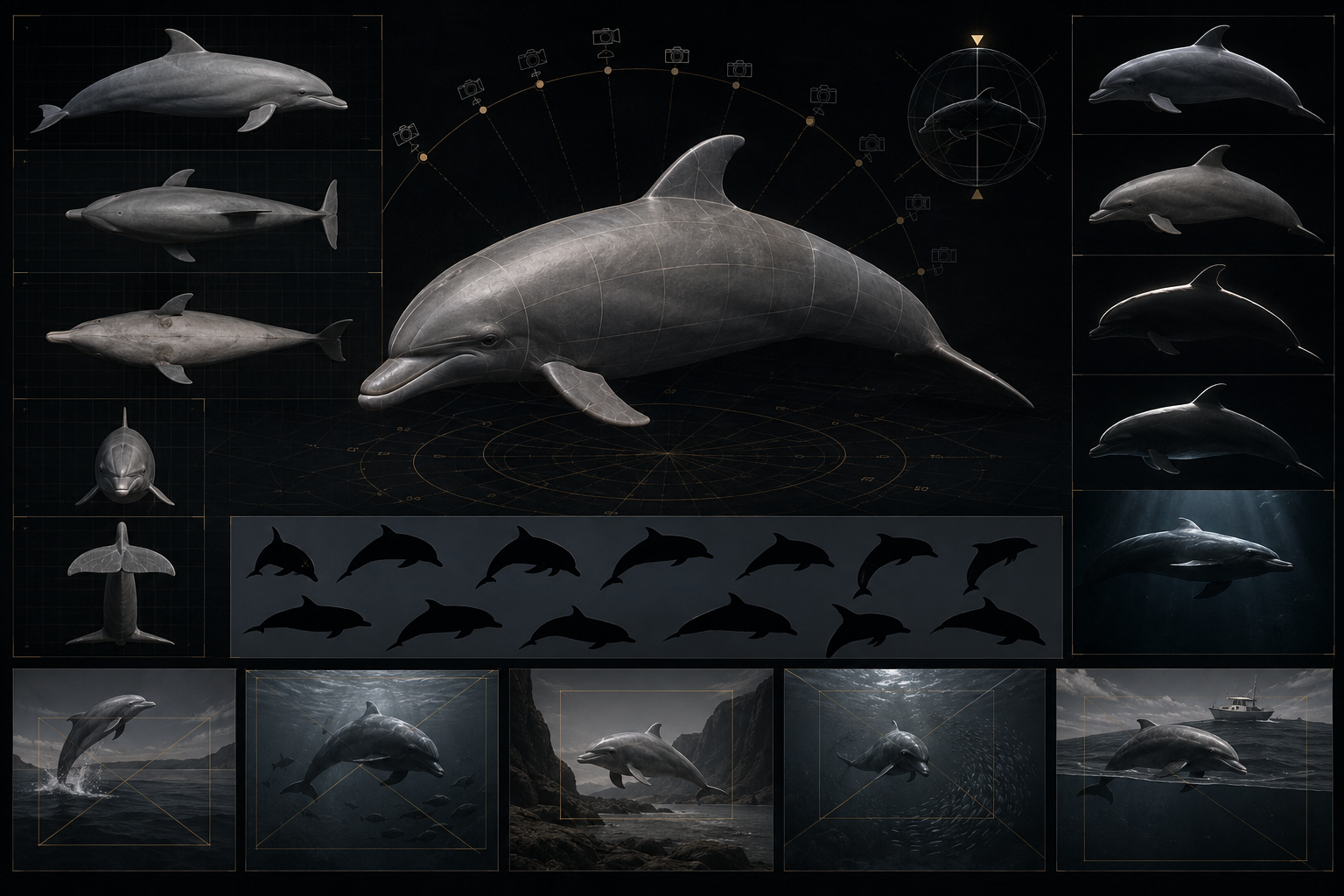
The broader whales and dolphins category is helpful when you want to compare how different cetacean silhouettes occupy a frame. In AI-assisted concept work, that comparison can improve scene blocking, horizon placement, and subject scale before moving into more polished graphic development.
Keep Reference Work Separate From Claims
Using a dolphin model as reference is a practical art-direction step. It supports anatomy checks, silhouette refinement, and clearer prompt targeting, but it does not require broad claims about automation or training data. That distinction matters because reference work is about visual control: choosing an angle, studying light, testing composition, and refining ideas with fewer accidental distortions.
For controlled dolphin reference in iterative concept work, explore the Common Bottlenose Dolphin category.