Velociraptor 3D Models for AI-Assisted Paleo Art and Educational Visuals
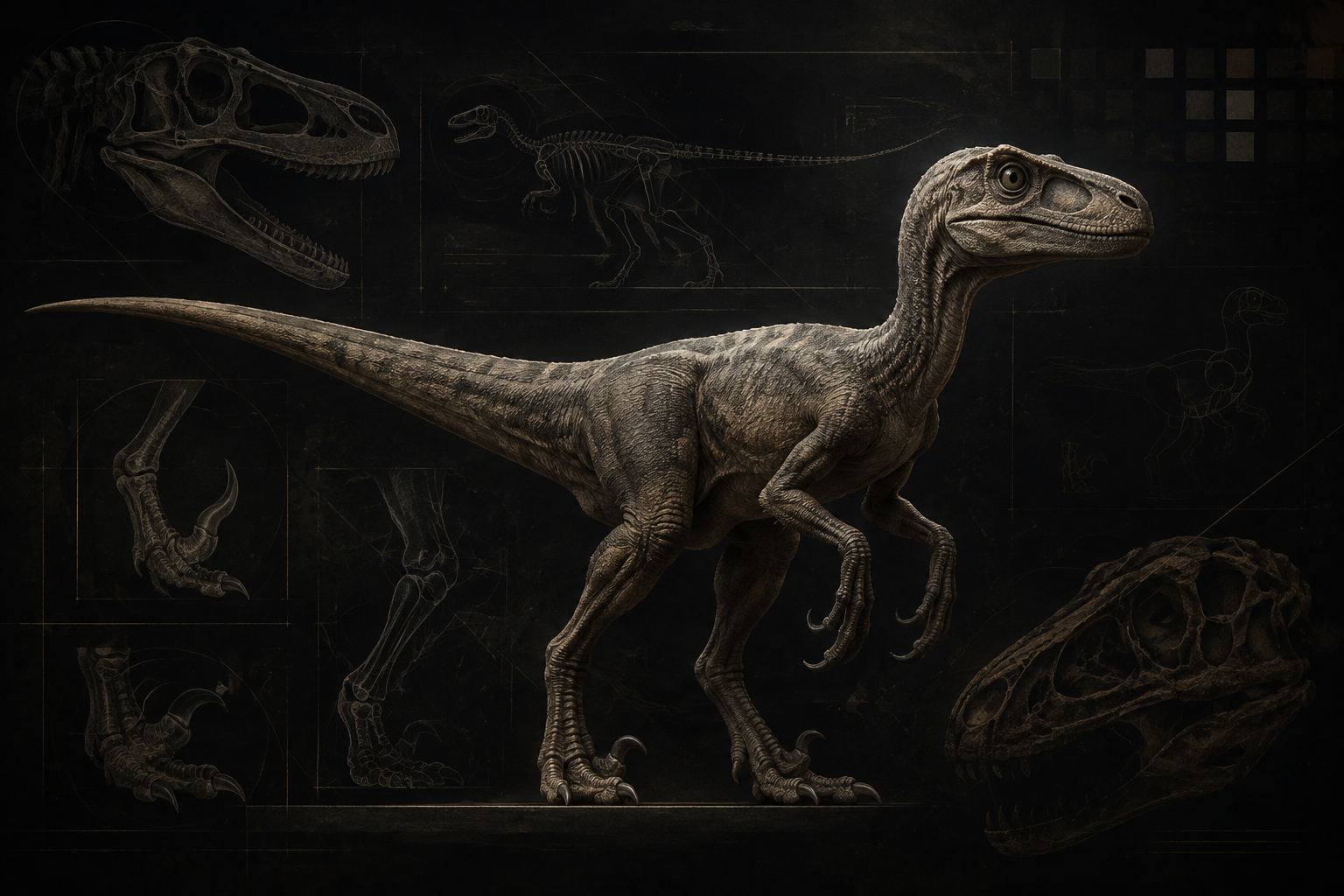
Controlled Reference for Paleo Art Direction
When AI-assisted paleo art starts from vague prompts alone, the result can drift quickly in silhouette, posture, and scene logic. A Velociraptor 3D model gives you a controlled reference object for testing those decisions before pushing further into concept work. You can study the line of the neck, torso balance, tail counterweight, forelimb placement, and leg posture from a chosen angle, then use that information to guide visual iteration more deliberately.
The Velociraptor category is most useful in that role: as a stable reference for composition and anatomy-informed silhouette work. It does not remove uncertainty from paleo imagery, and it should not be treated as proof of every visual detail. Instead, it helps artists and educators keep the basic structure of the subject more consistent while exploring mood, camera choices, and scene layout.
Use the Model to Test Pose, Light, and Composition
Small changes in pose can alter the entire read of a theropod image. A lowered torso may suggest stalking energy, while a taller stance can feel more observational or exhibit-like. Lighting choices also matter. Rim light can clarify the tail and head profile, while overhead light can flatten some forms and sharpen others. A 3D reference model helps you test those variables with more discipline than prompt-only iteration.
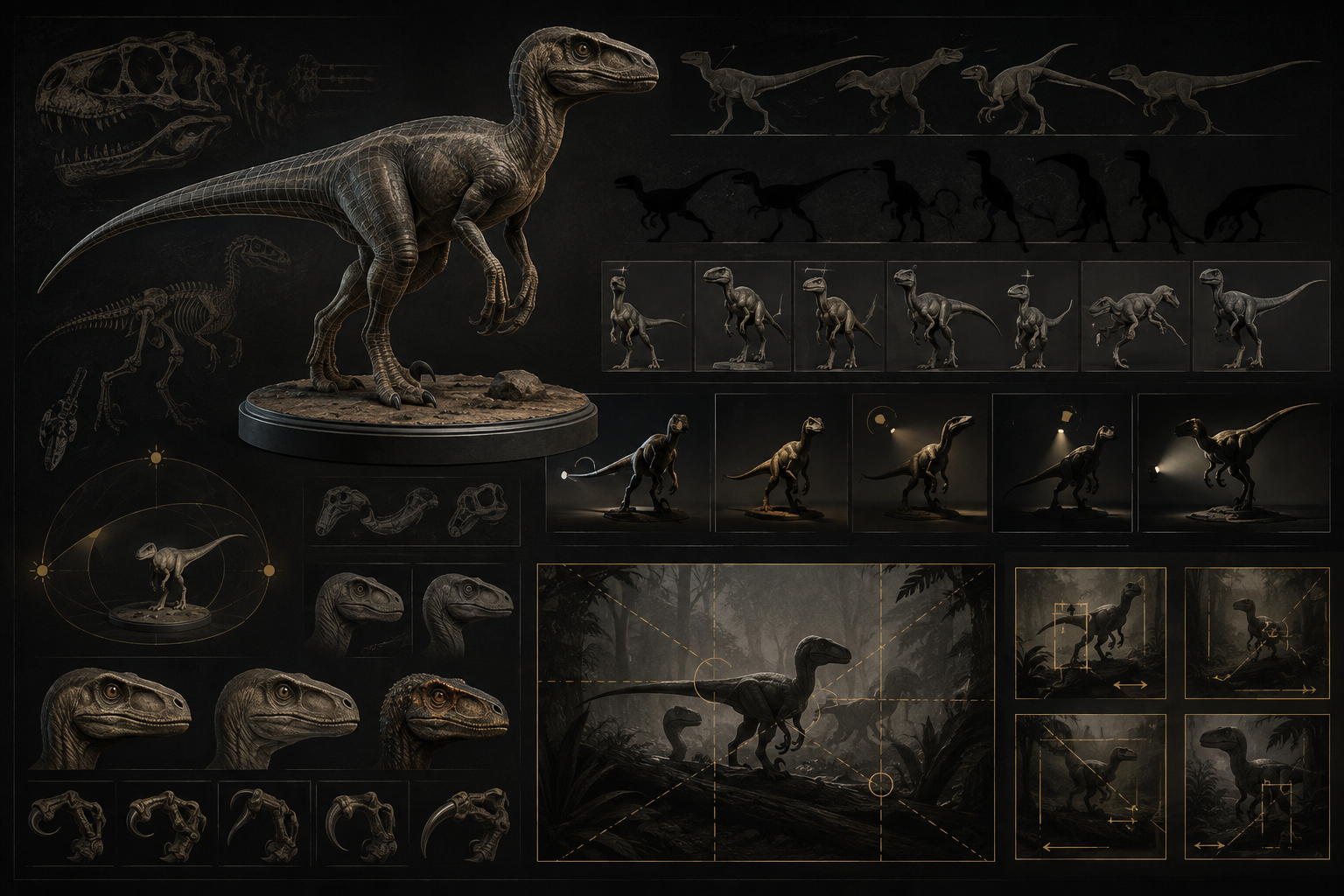
The broader theropod dinosaurs category is useful for comparing how different theropod silhouettes occupy a frame. That comparison can improve scene blocking, figure scale, and visual hierarchy whether the output is a concept illustration, a poster-style educational panel, or a classroom slide.
Educational Visuals Need Readability More Than Drama
For classroom biology or paleo visuals, readability usually matters more than spectacle. A model-based reference can help simplify the pose, clarify the body outline, and keep the animal legible when reproduced at smaller sizes in print or on slides. That makes it easier to discuss body plan, posture, and comparative anatomy without turning the image into a purely cinematic effect piece.
For controlled theropod reference in art and educational workflows, explore the Velociraptor category.