Whippet 3D Models: Anatomy, Poses and Production Uses
Anatomy That Changes the Asset Choice
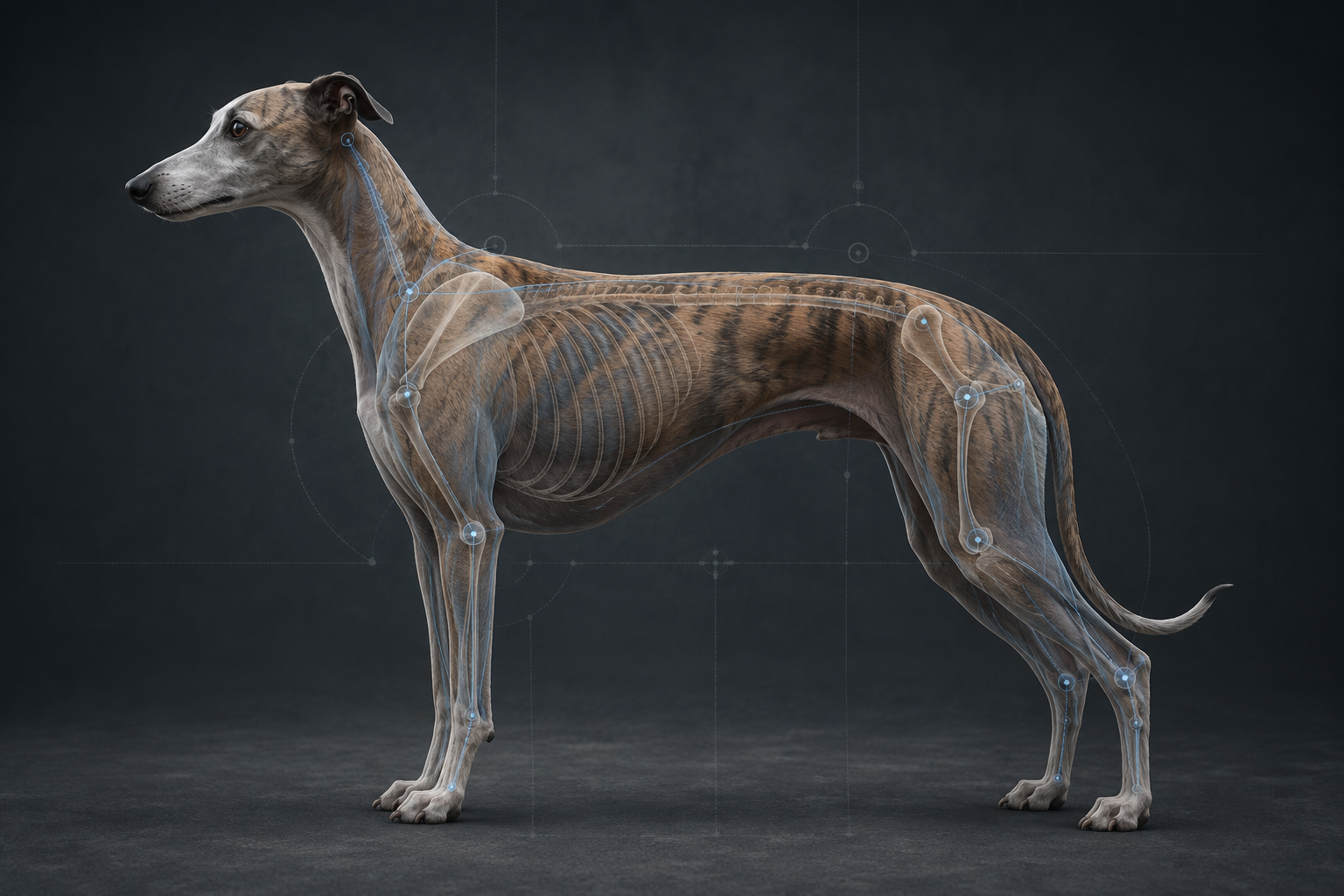
Whippet models succeed or fail on silhouette first. The breed's narrow chest, deep ribcage, and sharply tucked waist create a very specific sighthound profile that reads differently from a generic dog. If the torso is too cylindrical or the front is too broad, the asset stops feeling like a Whippet even before it moves. That matters when browsing breed-specific options inside the wider Domestic Dog catalog, where body type is often the fastest way to narrow down the right base mesh.
Long legs and a light frame also affect practical use. For rigging, you want clear shoulder, elbow, hip, and hock definition so deformations stay clean in extended poses. For rendering, the Whippet's sleek coat and bony landmarks do a lot of visual work, so a model with readable rib depth, pelvic structure, and neck length will usually look more convincing than one that relies on heavy surface detail.
Poses, Motion, and Rigging Priorities
Whippets are built for acceleration. Their sprint-oriented silhouette depends on spine flex, rear-leg drive, and a reach-forward front assembly, so pose selection matters more than it does on a neutral standing dog. A relaxed showroom stance can be fine for catalog stills, but for animation studies or hero renders, the better choice is often a pose that preserves the breed's elastic topline and long-stride mechanics.
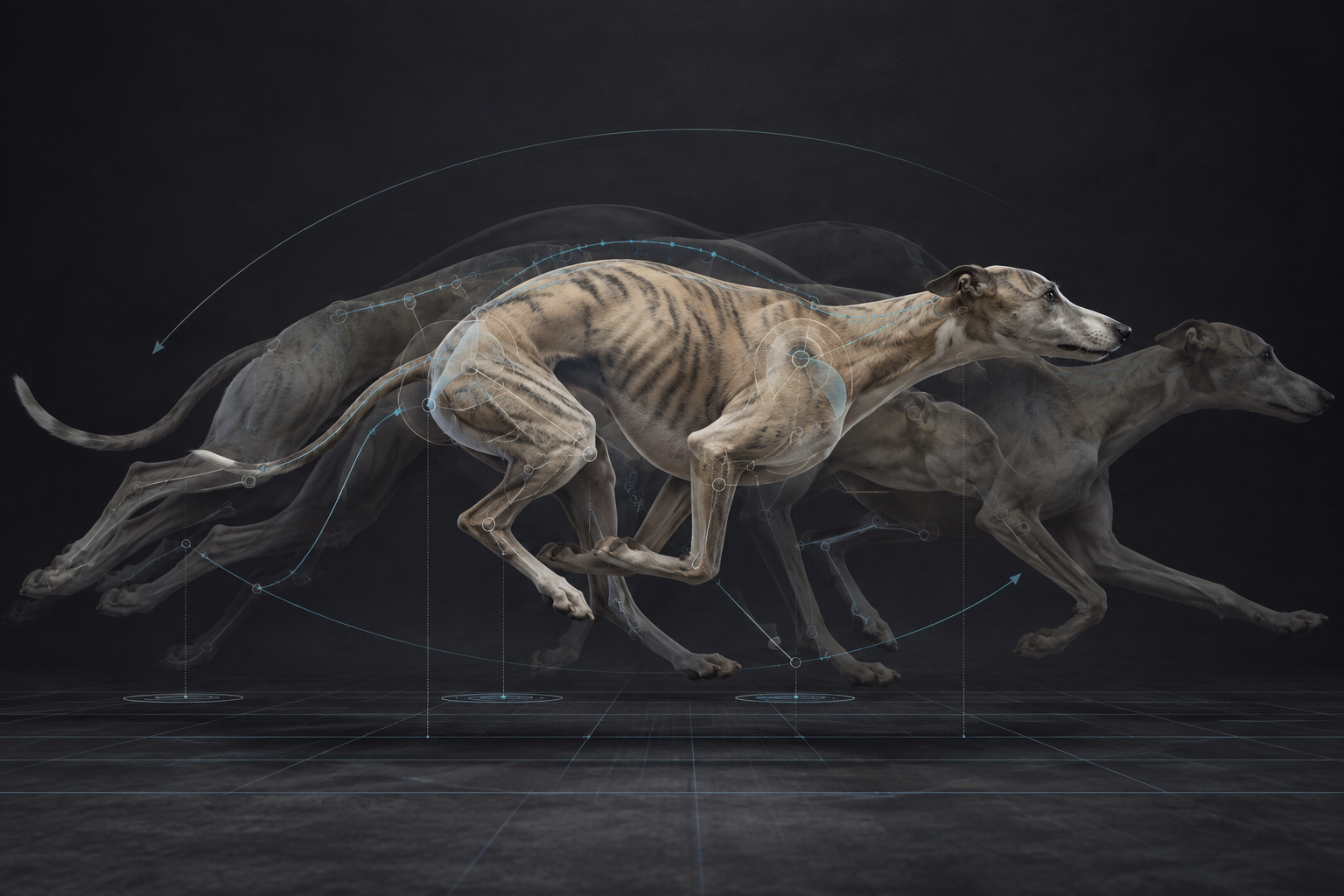
That same structure should guide rig expectations. A Whippet rig benefits from enough control in the spine, pelvis, shoulders, and tail base to support gather-and-stretch motion without collapsing the ribcage or thickening the waist. If the model will only be used for still rendering, that complexity matters less. If it needs run cycles, turnarounds, or anatomical motion previews, the deformation quality around those joints becomes the real checkpoint.
Best-Fit Production Uses
Whippet assets are especially practical for breed-specific dog scenes, anatomy references, sprint motion tests, and printable studies of lean canine structure. They are less about broad "any dog" coverage and more about a recognizable athletic form. That also makes them a useful complement to the broader guidance in Dog 3D Models for Animation, Games & 3D Printing, where breed range affects how a project starts.
For print use, watch thin ankles, tail support, and paw contact. For rendering or animation, prioritize proportion and joint behavior over extra mesh noise. Browse the Whippet catalog category to compare the current five models by pose and production fit.