Dog 3D Models for Animation, Games & 3D Printing
Overview
Dog 3D models sit at the intersection of anatomical familiarity and production complexity. Almost everyone can tell when a canine pose feels wrong, so proportions, gait, and head structure matter more here than with many generic quadrupeds. A useful domestic dog catalog is not just a collection of silhouettes. It needs enough variety to cover lean sighthounds, compact terriers, working breeds, and general mixed-breed body plans, while still being organized in a way that helps artists find the right asset quickly.
Within the Domestic Dog taxon, the value is in that range. Some projects need a neutral all-purpose dog for background scenes or previs. Others need a recognizable breed profile with specific leg length, chest depth, ear set, or muzzle shape. That difference affects rigging, animation cleanup, fur treatment, and even print stability. For buyers comparing formats and breeds, a taxonomy-based catalog is more practical than a loose tag list because it keeps related models together under the same species path.
Anatomy & Features
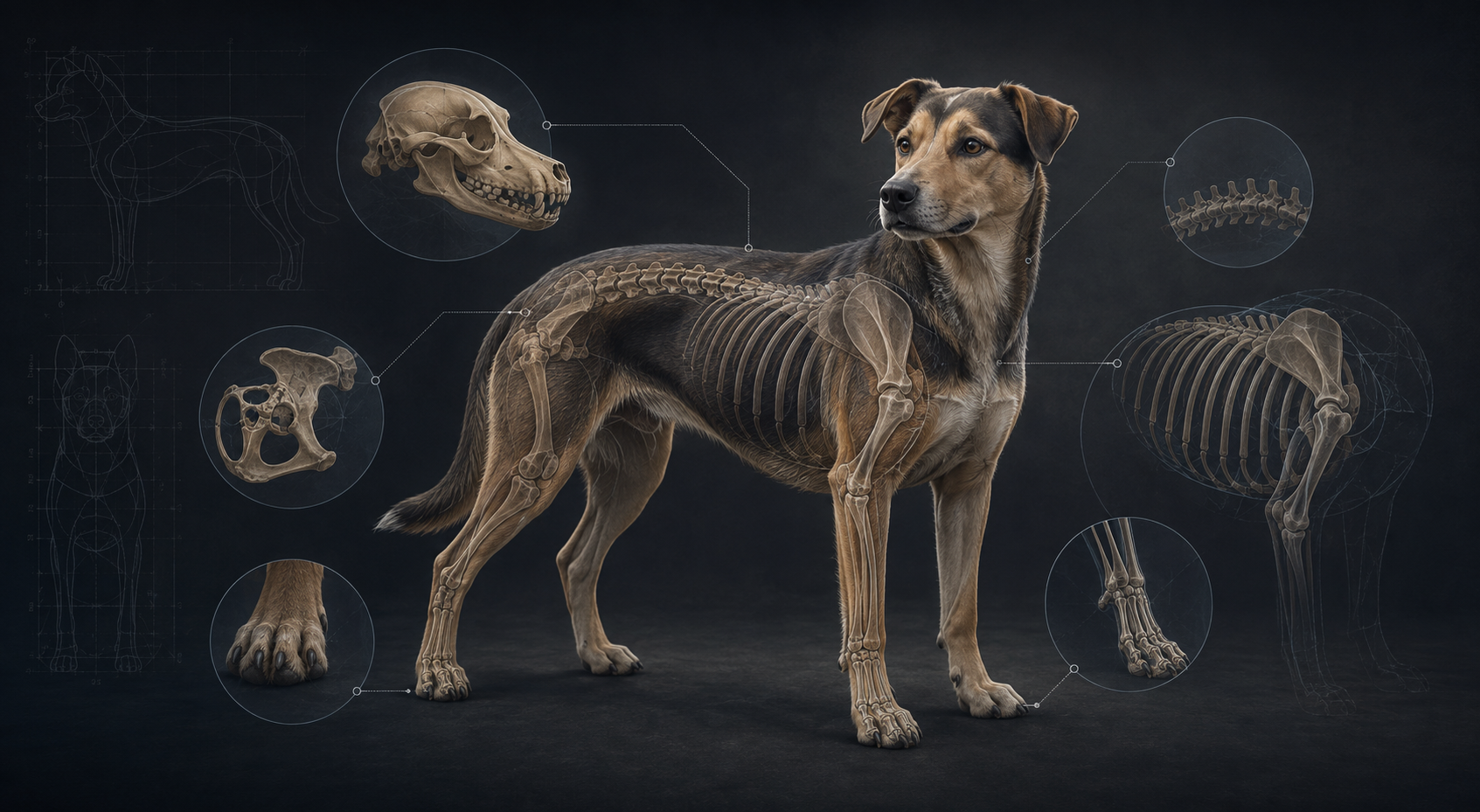
The strongest dog models usually get the fundamentals right before any extra detail is added. Canine anatomy is readable in the topline, ribcage depth, pelvic angle, paw size, and the length relationship between forelimbs and hind limbs. Shoulder placement and scapula movement are especially important for motion work, because dogs carry a lot of expression through the front assembly rather than a human-like collarbone system.
For sculpting and rendering, the head is another major checkpoint. Skull width, stop depth, muzzle taper, and ear placement are what make one breed feel distinct from another. A Whippet should read as light, narrow, and aerodynamic; a Bull Terrier needs a much denser body and a very different head mass. If those landmarks are off, the model may still be usable as a generic dog, but it stops being convincing as a breed-specific asset.
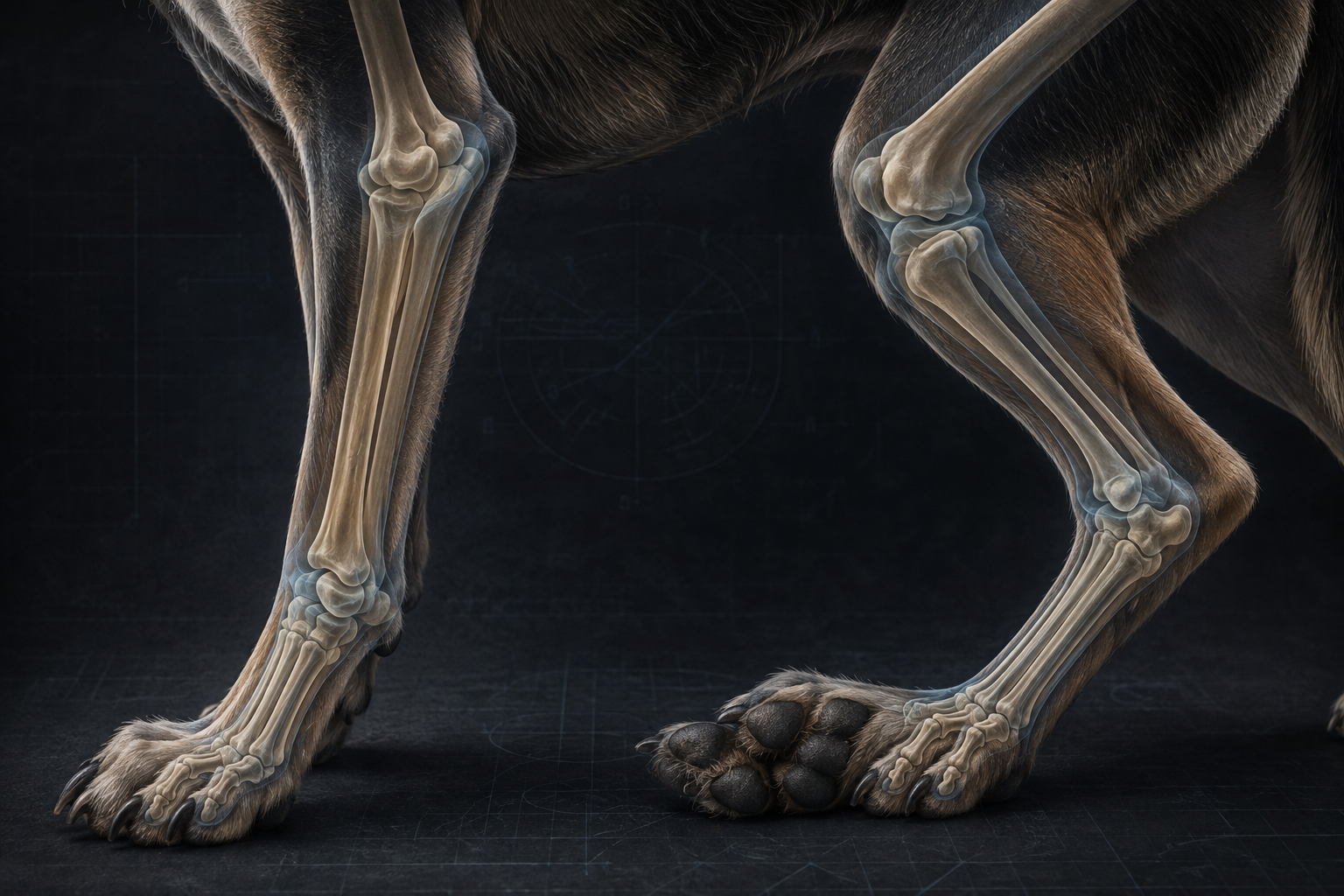
Topology also matters. Around the shoulders, elbows, hips, jaw, and tail base, clean edge flow makes deformation more predictable once a rig is applied. For static usage, details such as paw pads, nail separation, nose structure, and eyelid thickness do more work than excessive micro-surface noise. For printable studies, balanced limb thickness and grounded paw contact are practical features, because thin tails, narrow ankles, and floating details create avoidable print problems.
Common Uses in 3D/Animation
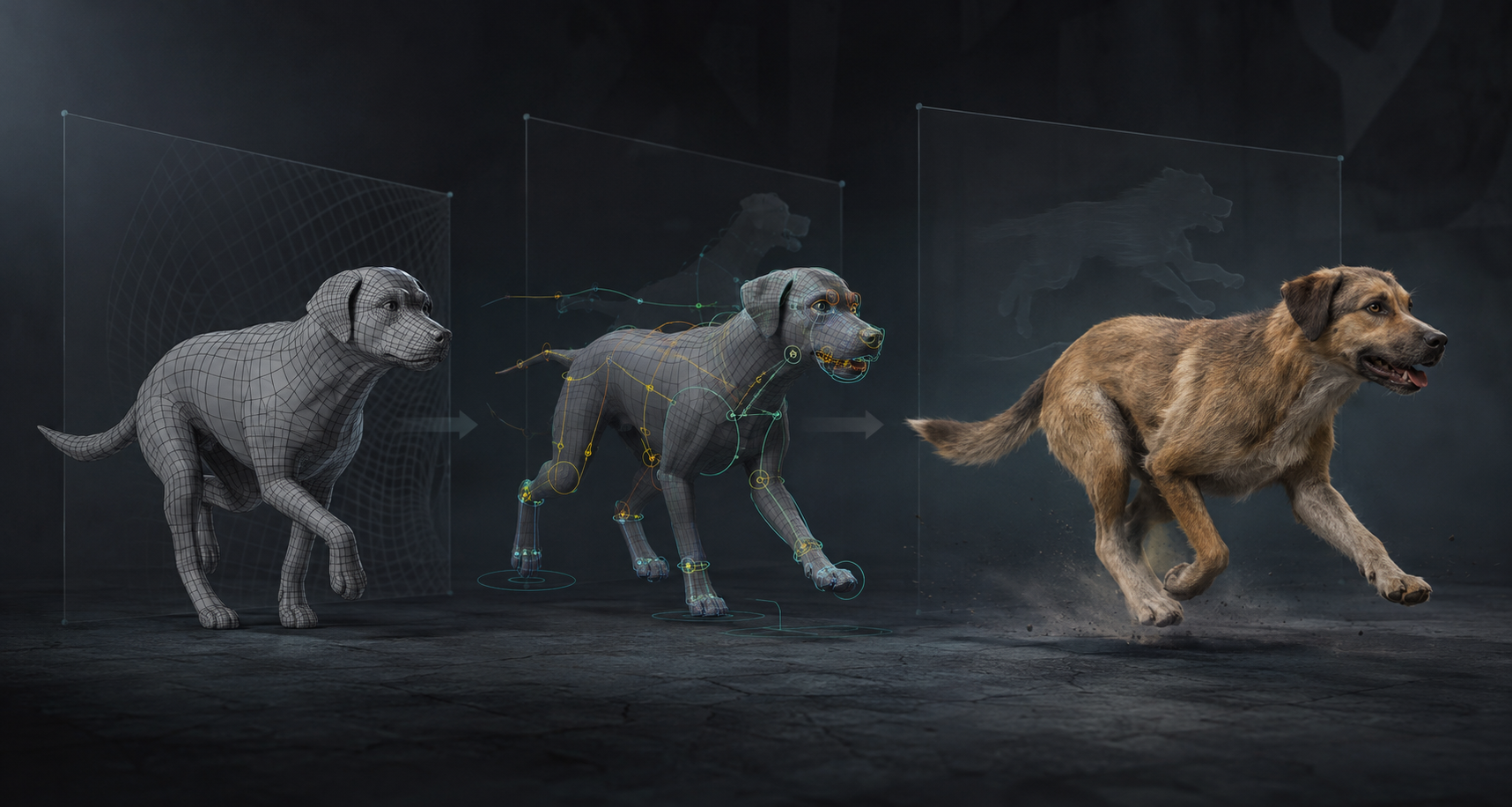
Domestic dog assets appear in several production contexts, but not every model has to serve every one of them. In animation, the main requirement is believable movement: a rig that supports weight shifts, spine flex, head turns, and gait cycles without breaking the silhouette. A neutral, well-proportioned dog can cover background crowd work, while a more breed-specific model is better when the animal is story-relevant.
In game development, dog models often need a clearer balance between silhouette recognition and runtime efficiency. A game-ready asset does not need film-level fur density, but it does benefit from readable breed traits, stable joint deformation, and formats that fit common engine workflows. For VFX, the priority usually shifts toward realism, close-up anatomical credibility, and compatibility with shot-based grooming, shading, or simulation pipelines.
3D printing is a different use case again. Here the question is less about rig performance and more about whether the pose, contact points, and fine structures can survive physical output. A standing dog with solid paw placement, sensible tail thickness, and controlled undercuts is more useful than a dramatic action pose that looks good on screen but prints badly without heavy supports.
Popular Breeds/Species
At species level, domestic dog is broad enough to support many visual targets inside one subtree. That is why breed coverage matters. Sighthounds, terriers, pointers, retrievers, and compact companion breeds all change the practical value of the catalog. Even when a project does not require an exact breed match, artists often start from the closest body type and adapt from there.
Lean athletic breeds are useful for fast-motion studies and elegant silhouettes. Stockier breeds are better references for heavier stance, broader skulls, and denser limb mass. A breed such as the Weimaraner can serve projects that need a clean short-coated sporting dog form, while a terrier-type model introduces a different balance of chest, neck, and head character. That spread makes the subtree more useful than a single “generic dog” listing ever could.
Download Options
Download choice should follow the intended job. For animation and general DCC use, formats that preserve rigging or broader scene compatibility are usually the first stop. For real-time workflows, lighter engine-friendly exports are often more useful than heavyweight source scenes. For printing, the practical question is whether the geometry is ready for clean physical output rather than whether it supports an animation stack.
Because the Domestic Dog subtree includes 42 models, it makes sense to compare by body type, breed, and format together instead of treating every dog as interchangeable. Browse the catalog path to narrow from species to breed, then pick the model whose anatomy and delivery format best fit the production task in front of you.