Horse 3D Models: Anatomy, Motion and Production Formats
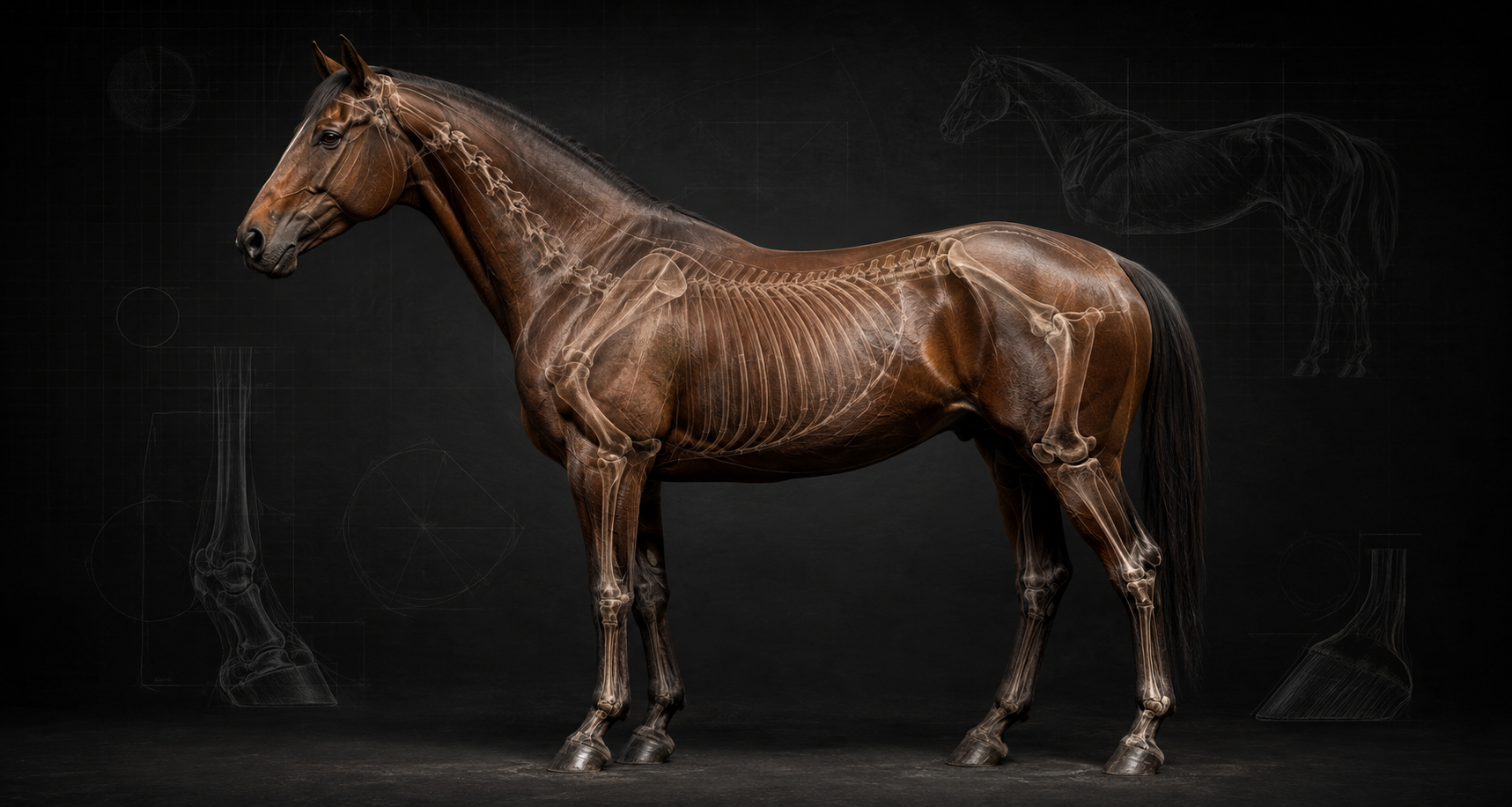
Anatomy That Makes a Horse Model Read Correctly
Horse models are unforgiving because proportion errors show up before the asset even moves. Long limbs, a deep chest, powerful hindquarters, and the continuous line from poll to back define the silhouette. If the neck ties in too thickly, the barrel is too cylindrical, or the pelvis lacks mass, the model starts to feel generic instead of equine. Hoof scale and ground contact matter just as much. A horse that appears to float above the surface or loads weight evenly onto every hoof at once loses the asymmetry that makes real stance and gait readable.
That is why the first filter is usually anatomy rather than detail density. Clean shoulder and hip landmarks, a believable spine arc, and a leg setup that separates knee, hock, pastern, and hoof planes will usually contribute more than extra skin noise or hair cards. When comparing options in the Horse category, those structural choices are what determine whether the model can support production work.
Rigging and Motion: Walk, Trot, and Canter
Equine rigs need enough control in the spine, scapular area, pelvis, and neck base to carry weight shifts through the body rather than only rotating the limbs. A walk requires clear four-beat sequencing and visible head-neck balance. A trot is more about diagonal pairs and suspension, so poor hoof timing or stiff back motion becomes obvious immediately. A canter adds another layer because the lead, gathered hindquarter push, and rolling spine action all need to read without collapsing the torso.
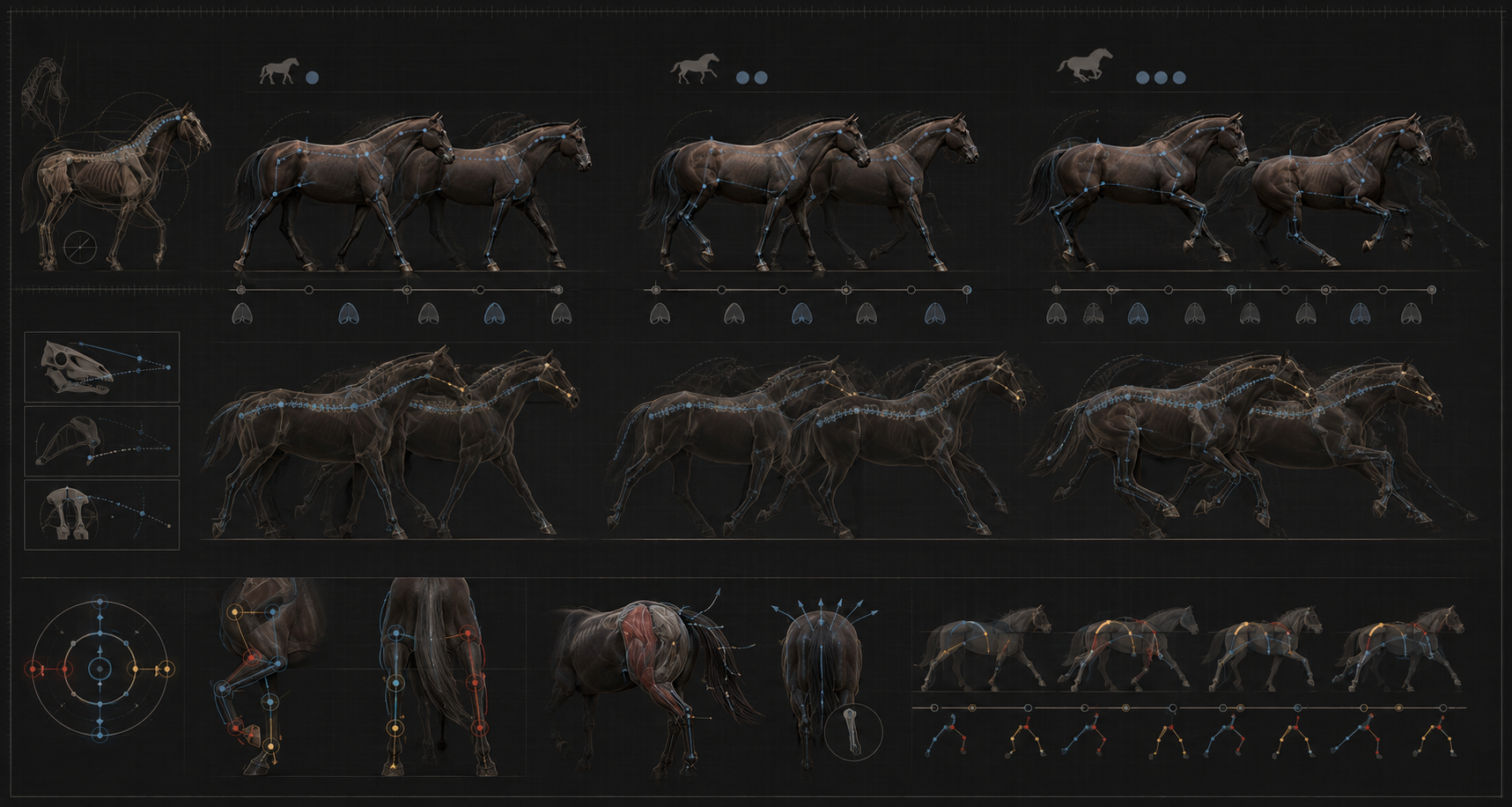
For rendering, this affects more than pose selection. Horses have broad planes across the shoulder, ribcage, and haunch that catch light differently from smaller quadrupeds, so believable motion often improves the still image as well. The same anatomy-first logic applies to physical output: for 3D printing, thin lower legs, narrow contact patches, and airborne poses can create fragile parts unless the stance is stabilized or the base design carries the load.
Choosing Formats for the Actual Job
Format choice should follow the task. A rigged scene or interchange format is more useful when the horse needs gait studies, shot animation, or downstream retargeting. A clean static mesh is enough for look development, catalog renders, or print prep if the pose is already resolved. In both cases, topology around joints and hoof edges matters more than whether the file arrives with unnecessary extras.
Browse the Horse category to compare the current two models by anatomy, motion fit, and delivery format.