Domestic Cat 3D Models: Anatomy, Feline Motion and Production Uses
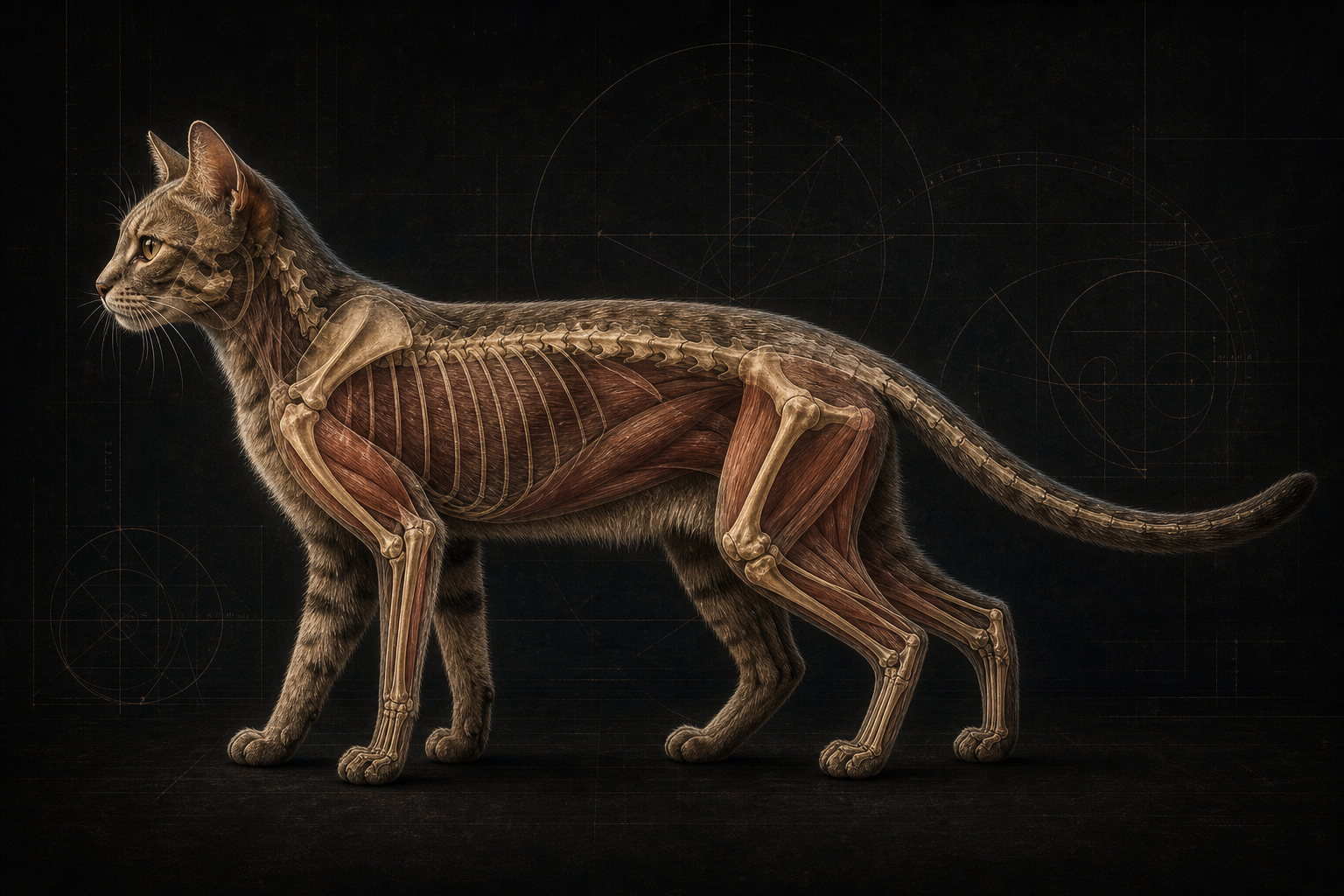
Anatomy That Makes a Cat Model Read as Feline
Domestic cat models are judged first by the silhouette created by a flexible spine, free-moving shoulder blades, digitigrade limbs, and a tail that acts as both counterweight and gesture line. If the thorax is too rigid or the scapulae are treated like fixed human shoulders, the front reach immediately feels wrong. The same applies when the hind limbs are built too straight. Cats compress and extend through the pelvis, lumbar spine, and hock in a way that keeps the body spring-loaded even in a quiet stand.
That is why the best assets in the Domestic Cat category usually establish ribcage taper, pelvic width, paw scale, and neck-to-skull proportions before chasing fur detail. A compact build such as a British Shorthair needs more mass through the chest and forequarters, while an Abyssinian reads longer and lighter through the torso. Those differences affect whether the base mesh can sell a crouch, perch, or landing pose without looking canine or generic.
Topology and Rigging for Walk, Jump, and Perch Poses
Clean topology around the scapular slide, elbow pinch, wrist, hip, hock, jaw hinge, and tail base is what keeps a cat rig usable. Edge flow has to support two opposite states: the gathered compression of a crouch and the stretched line of a leap. On feline meshes, that usually means preserving loops that travel from sternum through axilla to forelimb, plus enough density across the lumbar arc to bend without faceting the back.
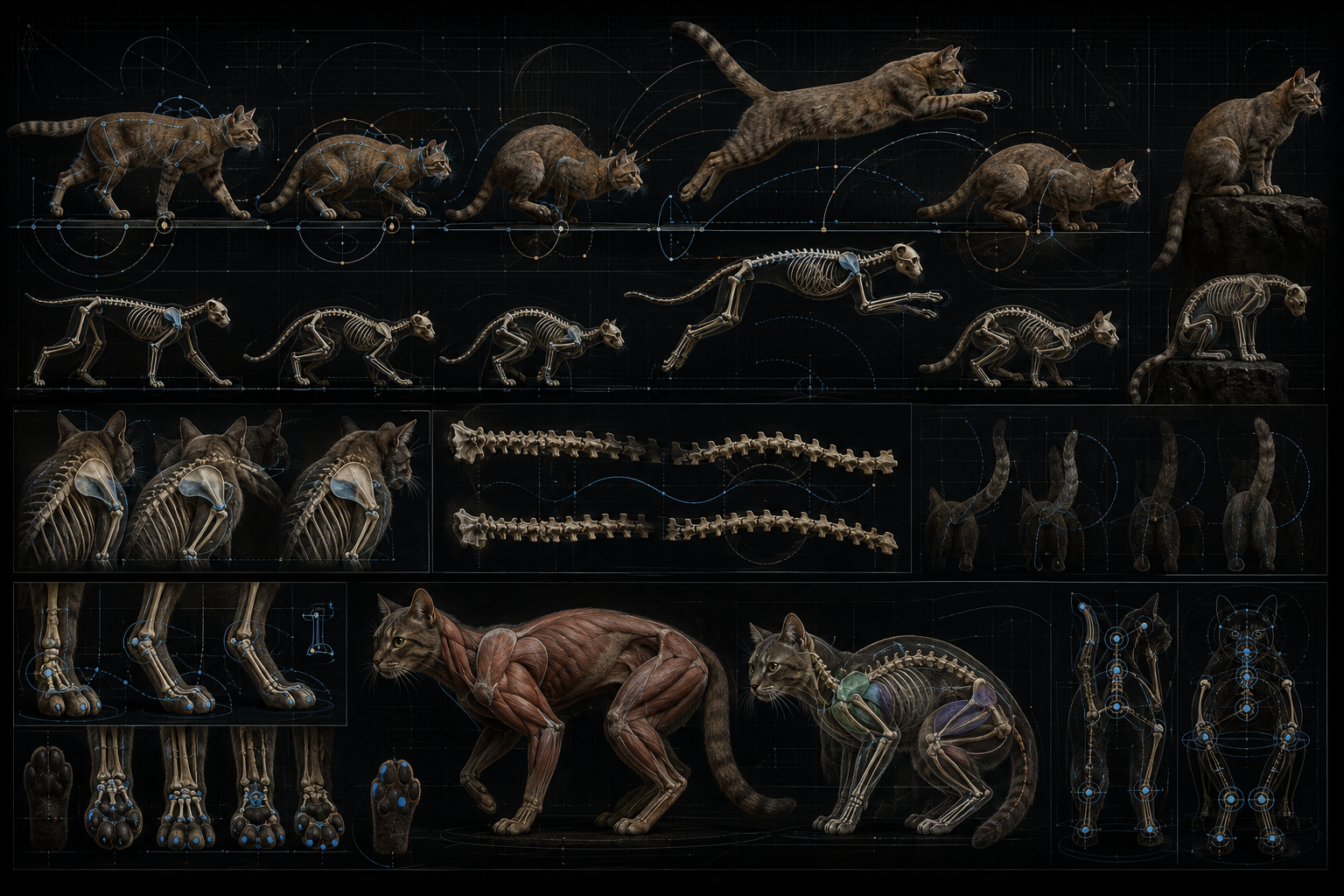
Rigging priorities follow the same structure. A convincing walk needs visible scapular travel and alternating paw placement rather than a stiff torso with legs cycling underneath it. A jump requires spine curl on takeoff and extension through the landing beat. A perch pose is a different test again: paws must wrap convincingly, the tail should rebalance the silhouette, and the chest cannot collapse when the forelimbs tuck close.
Rendering and Print Stability
For rendering, cats benefit from readable plane changes more than noisy surface detail. Light needs to catch the brow ridge, muzzle break, shoulder cap, and iliac area cleanly, otherwise short-haired models lose definition under grooming or shading. For print, the failure points are practical: thin tails, isolated toes, long unsupported whisker pads, and airborne poses with too little contact area. A neutral standing or seated pose with consolidated paw support usually survives scaling better than a dramatic mid-leap sculpt.
Browse the Domestic Cat category to compare the current four models by anatomy, rigging fit, and production use.