Beagle 3D Models: Scent-Hound Anatomy, Ears and Animation Poses
Compact Scent-Hound Form
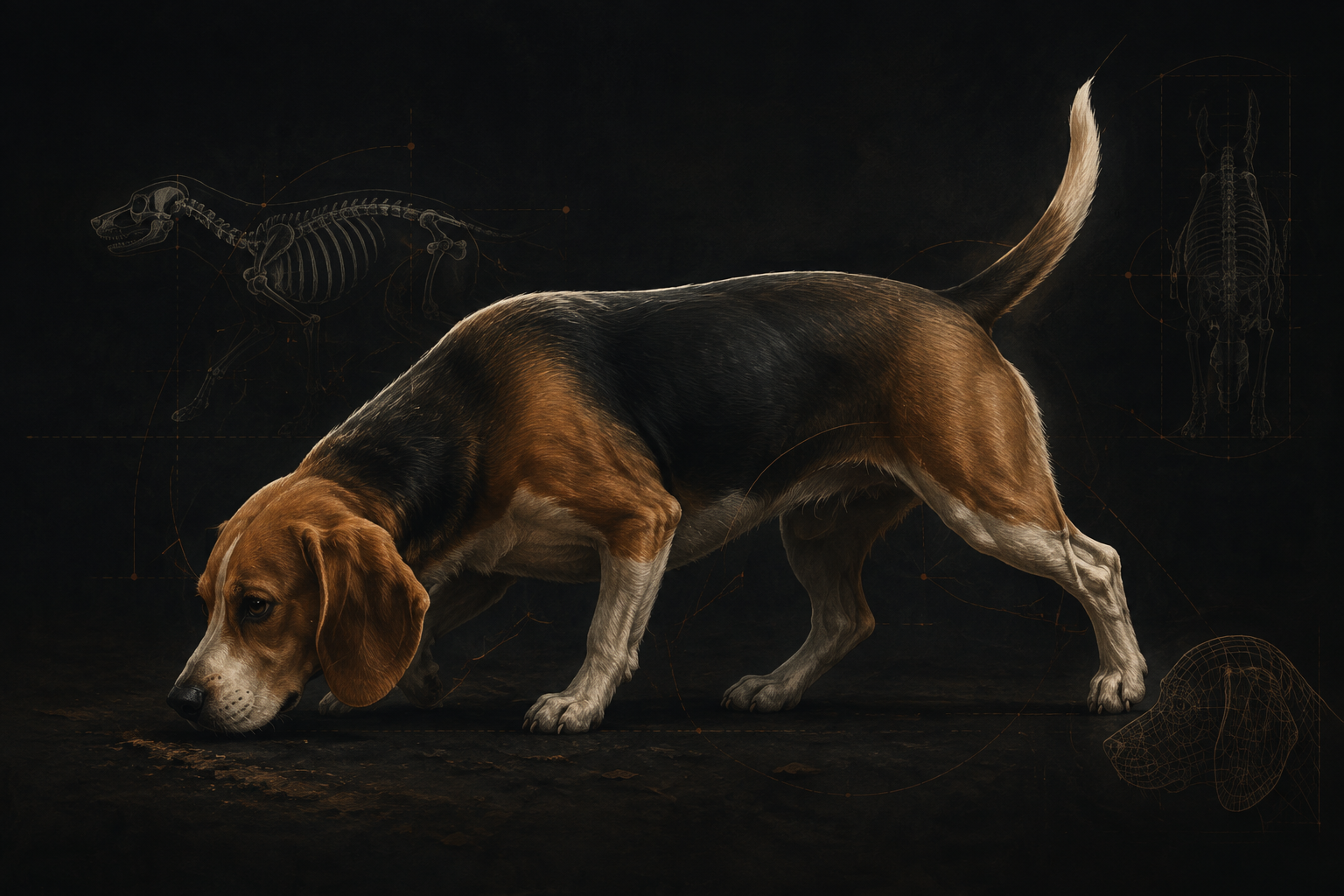
Beagles read clearly because their proportions are practical rather than elegant: a broad head, moderate muzzle, deep chest, sturdy limbs, long pendant ears, and a low center of gravity that keeps the body close to the line of scent. That compact scent-hound build is the first checkpoint when comparing options in the wider Domestic Dog catalog. If the legs get too tall or the body loses that slightly grounded, forward-searching balance, the model starts drifting toward a generic small dog instead of a recognizable Beagle.
Tracking posture matters just as much as raw proportion. A useful Beagle model should hold up in an alert stand, a nose-down sniff, and a steady walk with the neck reaching forward instead of lifting theatrically. Those poses show why the breed works well for readable animation studies: the silhouette stays legible even in restrained motion, because the head carriage and body weight shift communicate intent immediately.
Topology, Ears, and Motion
Topology on a Beagle earns its keep around the jaw hinge, lips, shoulder pocket, elbow, and the base of the ears. The head needs enough structure to preserve the breed's broad skull and soft muzzle planes without turning the face stiff in close views. Around the ears, cleaner edge flow is more important than heavy sculpt noise, because the ear shape has to bend, drag, and settle naturally when the dog turns or lowers its head.
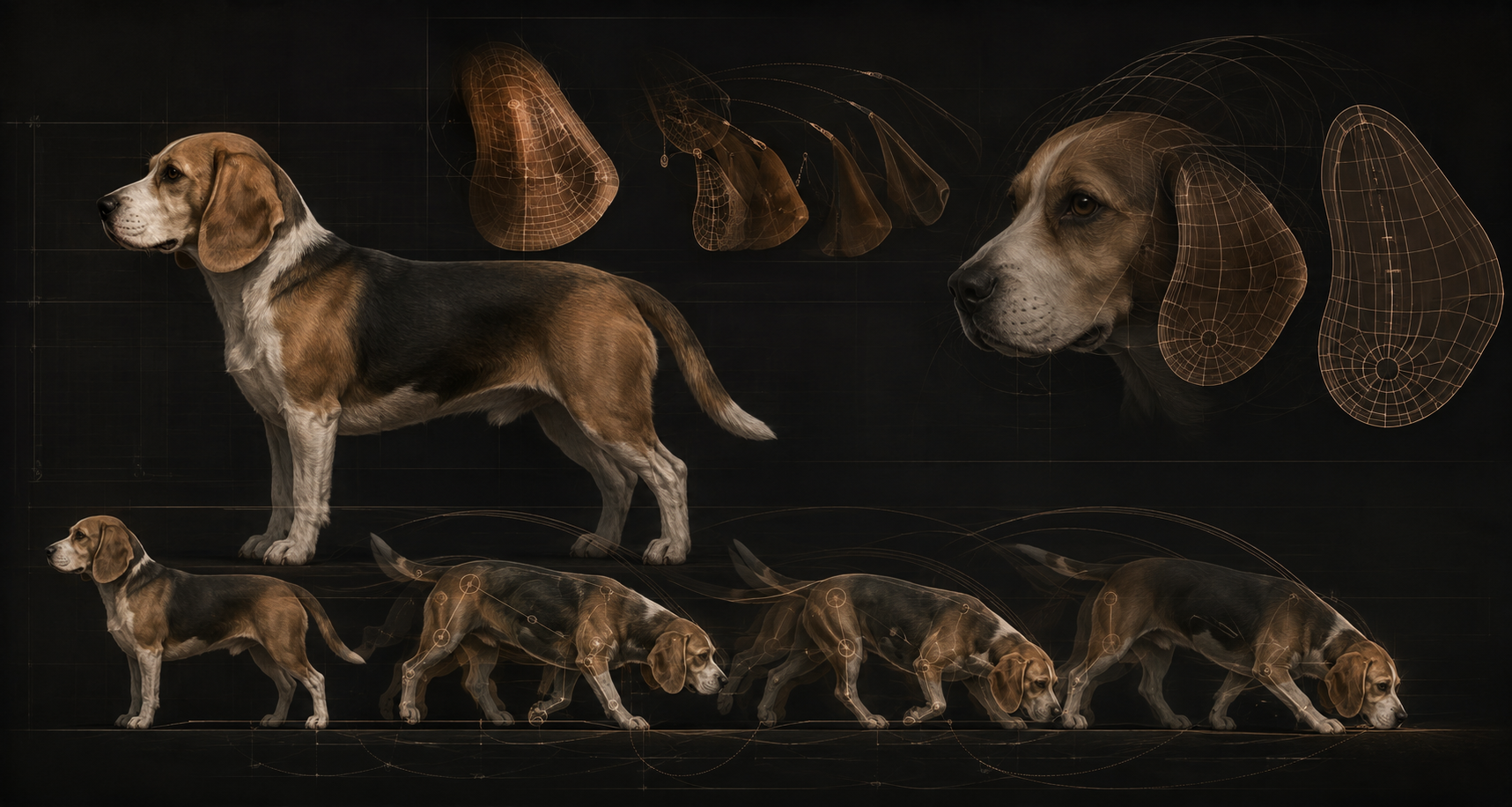
Ear secondary motion is the main rigging giveaway. Beagle ears should not flap like light cloth; they lag, swing, and compress with noticeable weight. For walk cycles and sniffing passes, that means giving the ear base enough control for overlap while keeping the tip motion soft and gravity-led. The same logic supports rendering: short coat surfaces expose form, so shading benefits more from clean mass changes around the head, shoulders, and ribcage than from exaggerated texture detail.
Rendering, Animation, and Print Fit
For animation, prioritize grounded walk and scenting poses over dramatic sprinting. Beagles are active, but their most breed-specific motion is deliberate tracking, with readable forelimb placement and a stable torso. For printing, watch the ear tips, tail thickness, and paw contact, since those are the parts most likely to become fragile in a smaller physical output. For still renders, proportion and posture will sell the breed faster than extra mesh density.
Browse the Beagle category to compare the current three models, and see broader breed coverage in Dog 3D Models for Animation, Games & 3D Printing.