Catahoula Leopard Dog 3D Models: Coat Patterns, Anatomy and Working-Dog Motion
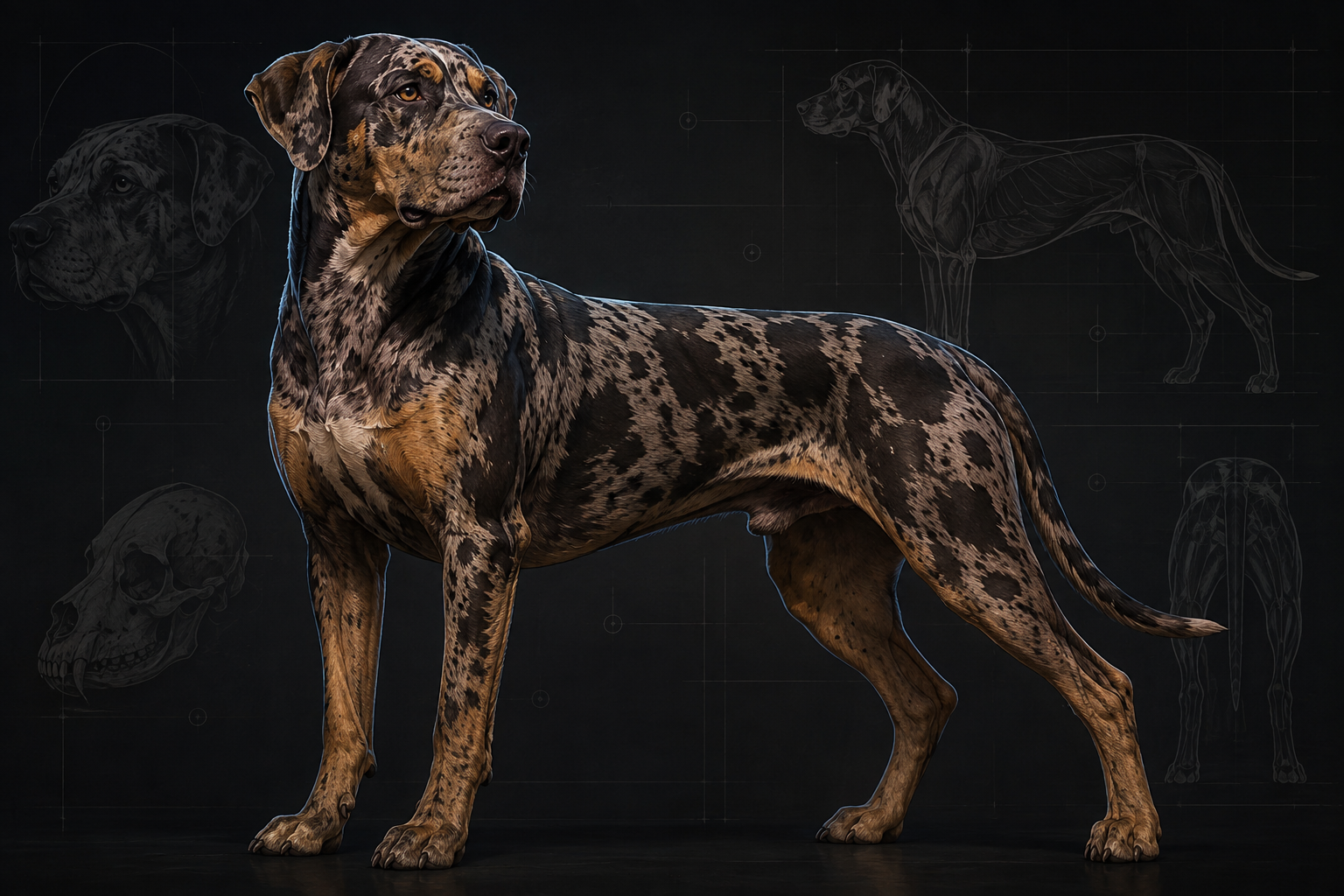
The Catahoula Leopard Dog stands out immediately through its mottled coat pattern, athletic but sturdy frame, broad head, expressive drop ears, and alert working-dog posture. Those traits are what make the breed useful in 3D, but they also make it easy to genericize if the coat masks drift or the body starts reading like a hound, shepherd, or bully type. When comparing assets in the wider Domestic Dog catalog, the first checkpoint is whether the silhouette still feels powerful, moderate, and ready to move rather than ornamental.
Coat Pattern and Material Planning
Material planning matters more on a Catahoula than on many short-coated breeds because the coat itself carries so much identity. Leopard and merle-style patterning should be blocked as large readable color regions first, then broken with smaller spotting so the shoulders, ribcage, hips, and head keep their form under light. If the mask becomes too noisy, the dog loses structure; if it becomes too clean, the breed loses character.
That short single coat also changes shader priorities. You do not need heavy fur grooming, but you do need restrained roughness variation, subtle specular breakup, and enough color separation to keep the mottling visible without flattening the body. For close renders, the broad skull, strong muzzle, and cheek planes should read through the shader rather than being buried under texture contrast. The same breed-specific decisions carry into the narrower Catahoula Leopard Dog category, where coat readability is often the fastest differentiator across only three models.
Topology, Rigging, and Working Motion
Topology earns its keep around the jaw hinge, neck-to-shoulder transition, elbow, ribcage, pelvis, and hocks. The ears need clean edge flow because they are short-to-medium drop ears with visible weight, not decorative flaps. A practical rig gives them controlled overlap in turns and head lifts while keeping the ear base anchored close to the cheek.
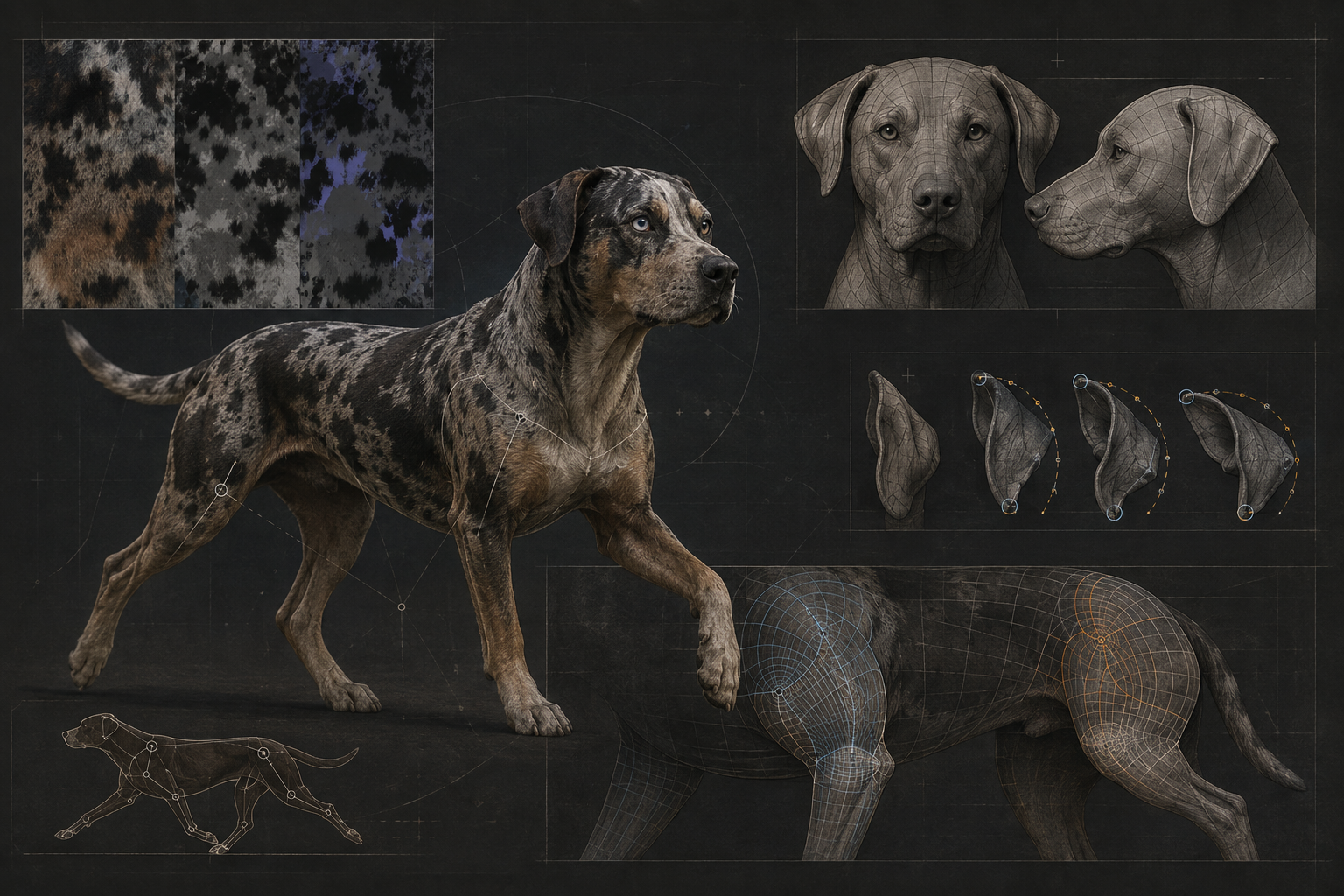
For pose and gait selection, a grounded walk, tracking trot, or alert stand usually sells the breed better than an extreme sprint. Catahoulas should look capable and enduring, with balanced reach and drive rather than elastic sighthound motion. For still rendering, that means preserving a ready-to-work stance with firm paw placement and a natural tail line. For print, watch tail thickness, ear edges, and ankle support so the physical model keeps the same practical strength as the digital silhouette. For broader canine production context, see Dog 3D Models for Animation, Games & 3D Printing, then browse the Catahoula Leopard Dog category.