Doberman Pinscher 3D Models: Athletic Silhouette, Rigging and Guard Poses
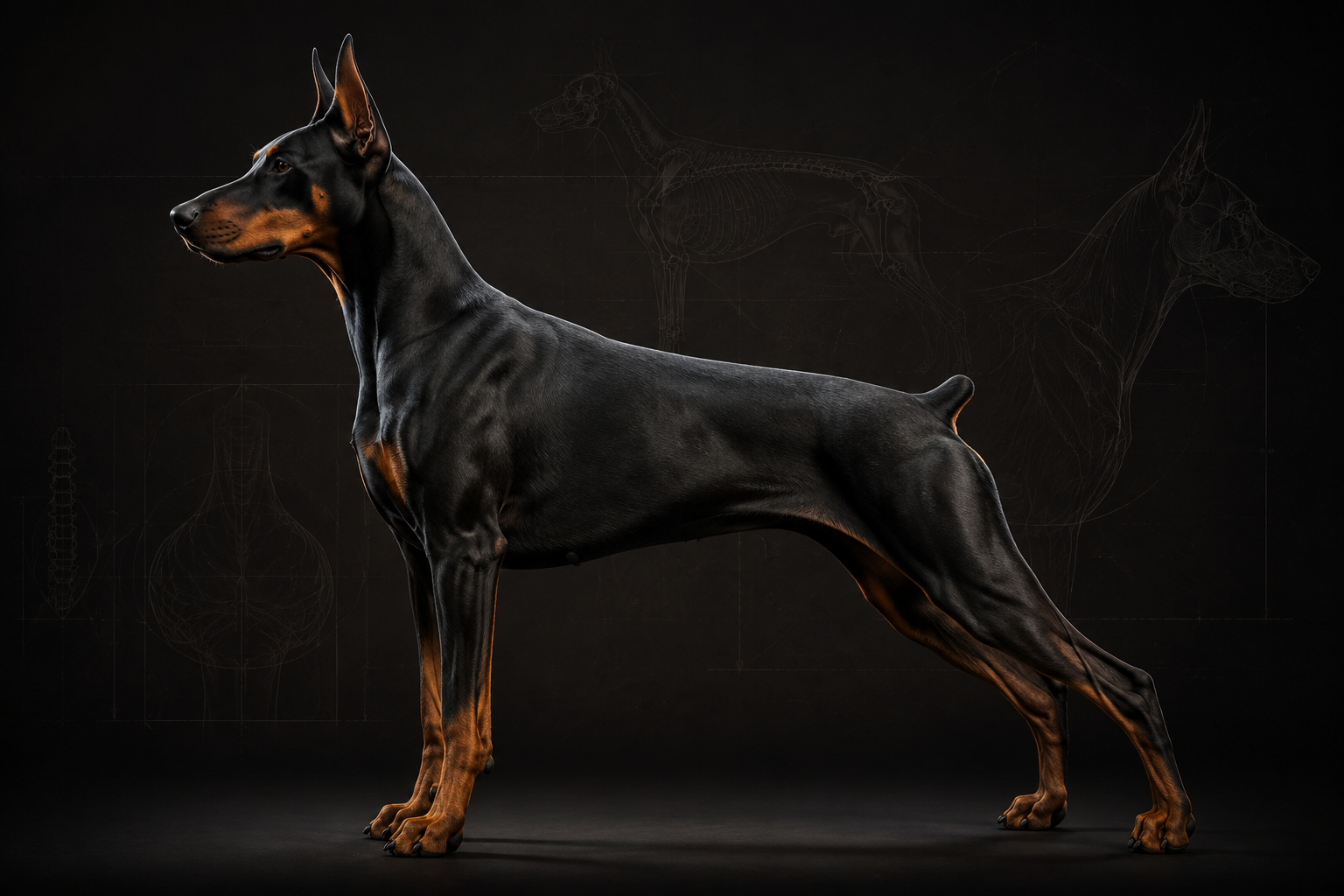
The Doberman opens with silhouette. A deep chest, narrow waist, long neck, clean short coat, alert ears, and tight athletic frame make the breed readable before texture or color does anything. If the ribcage is too barrel-shaped, the neck too thick, or the topline too soft, the model starts drifting toward a generic short-haired dog. That is why the first filter is usually shape accuracy inside the wider Domestic Dog catalog and the more specific Doberman Pinscher category.
Topology and Deformation Priorities
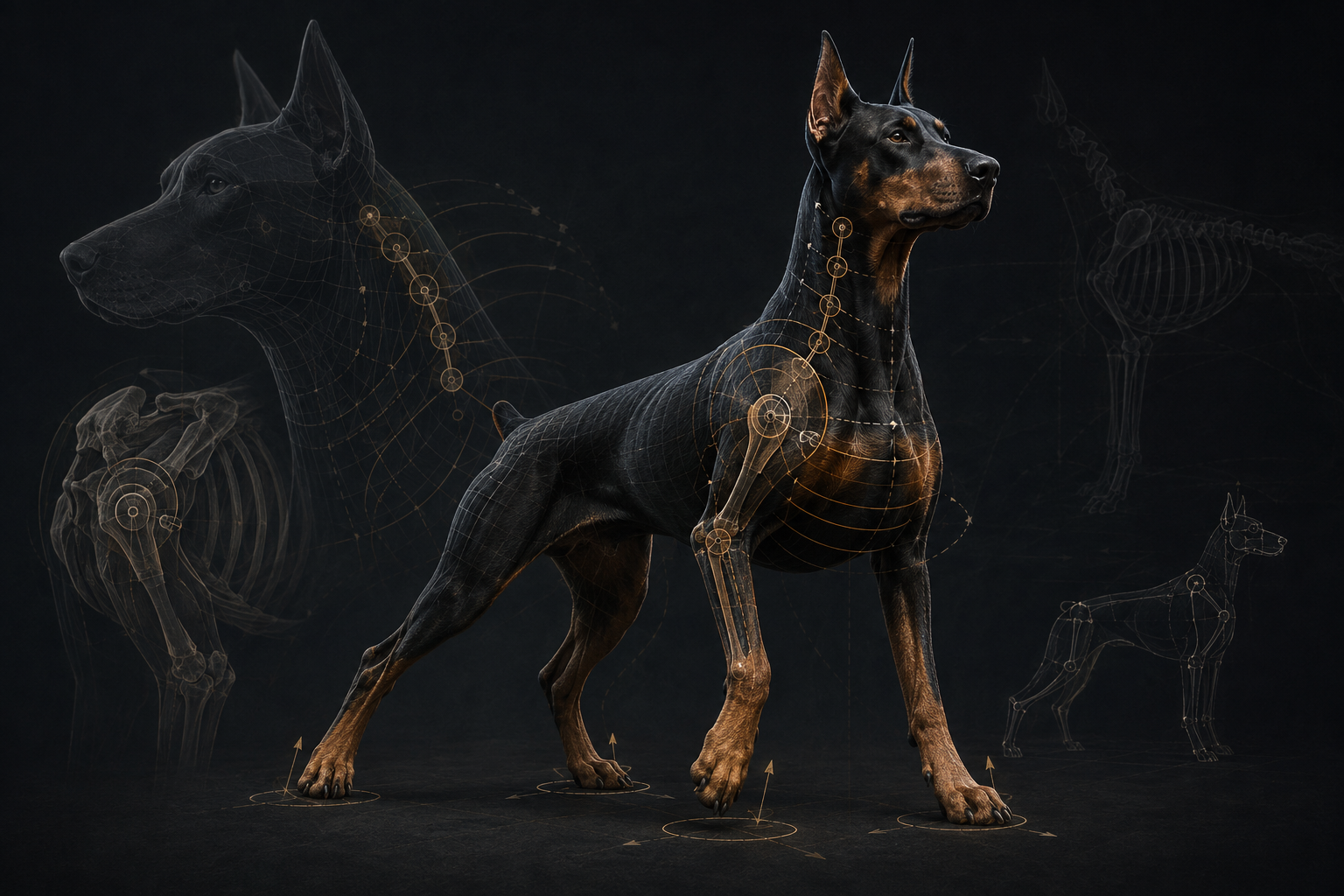
Dobermans need clean topology around the lower neck, shoulder pocket, sternum, and flank because those areas define the breed in both stills and motion. Edge flow should support the transition from the long neck into the chest without pinching when the head turns or lifts into an alert pose. The shoulder assembly also needs enough structure to preserve the forequarter silhouette when the front legs step forward; otherwise the chest can collapse and the stance loses authority.
The short coat raises the bar for surface discipline. There is nowhere to hide lumpy shading or vague muscle placement, so readable scapula, rib depth, and lean abdominal tuck matter more than extra sculpt noise. For animation, controlled deformation in the neck base, clavicle region, elbows, and hips is usually more useful than excessive facial complexity.
Guard Stances, Motion, and Rendering
A Doberman often reads best in a restrained guard posture rather than an exaggerated action pose. A planted front, lifted head, forward attention, and balanced rear support the breed's controlled intensity without forcing the rig into unstable extremes. That makes breed-specific pose selection just as important as mesh quality, especially if the asset is being compared with broader canine guidance in Dog 3D Models for Animation, Games & 3D Printing.
For rendering, the clean coat favors strong rim light and subtle specular breakup over heavy fur treatment. For print use, stability comes from grounded paws, supported ear geometry, and enough thickness in the tail and lower legs to avoid fragile points. Browse the Doberman Pinscher category to compare the current three models by silhouette, rig behavior, and pose fit.