Weimaraner 3D Models: Coat, Anatomy and Animation Workflows
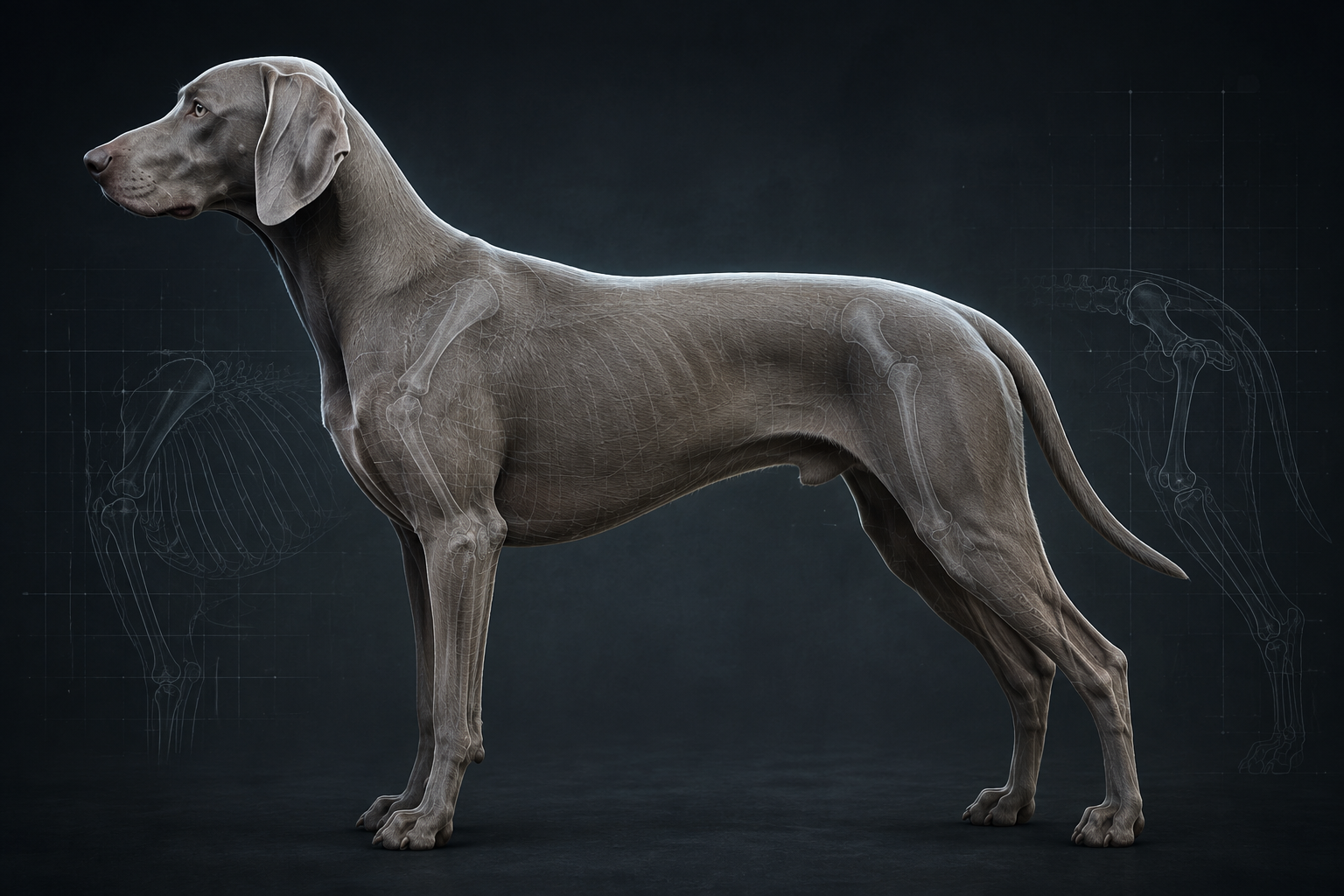
The Weimaraner's short silver-grey coat, long ears, athletic chest, long neck, and clean hunting-dog silhouette give it a very specific role in 3D work. This is not a breed that hides proportion problems under heavy fur. If the ribcage is too barrel-shaped, the neck too short, or the forequarters too light, the model stops reading as a Weimaraner almost immediately. That makes breed accuracy the first filter when comparing assets inside the Domestic Dog catalog and the narrower Weimaraner category.
Coat and Proportions in Rendering
Because the coat is sleek and close to the body, surface form does most of the visual work. Good Weimaraner models need readable sternum depth, a smooth neck-to-shoulder transition, and enough length through the limbs and muzzle to preserve the breed's elegant sporting profile. In rendering, that short coat also changes the shading task: subtle specular breakup and muscle planes matter more than dense fur grooming or noisy displacement.
That is useful in production because the breed can support clean editorial renders, anatomy studies, and realistic canine shots without the extra complexity of a long-coated dog. It also means poor shading is easier to spot. If the coat looks plastic or the chest and flank planes flatten out under light, the model loses credibility fast.
Ears, Gait, and Rigging Workflow
The ears are one of the main rigging checkpoints. They are long enough to add motion lag and silhouette change, but light enough that exaggerated secondary animation can look artificial. A practical setup gives the ears controlled overlap during walks, turns, and head lifts while keeping the leather thin and readable in profile.
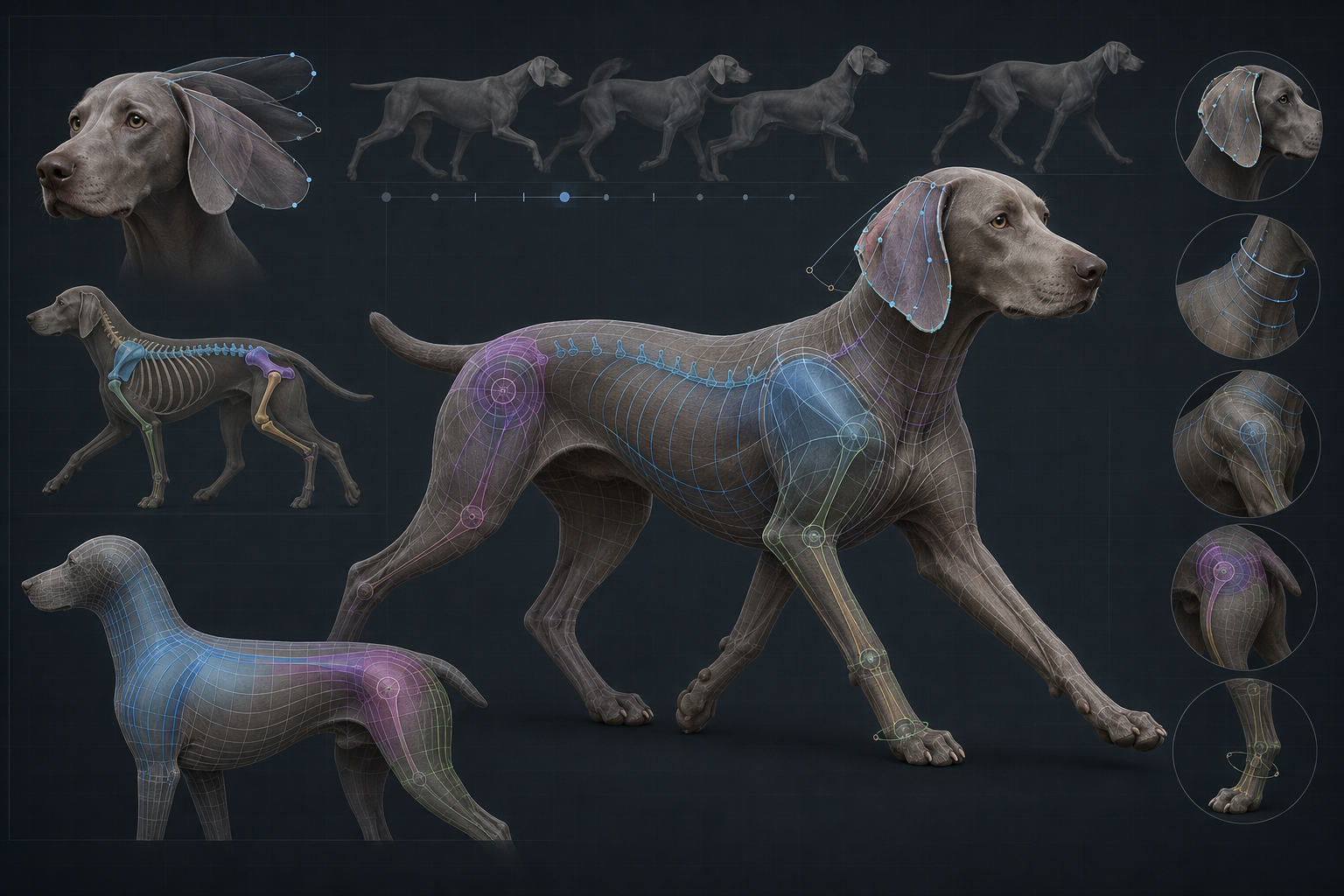
Gait matters for the same reason. Weimaraners are athletic but not built like extreme sighthounds, so the rig should support efficient reach, steady back motion, and clear weight transfer through the shoulders and hips. Clean topology around the base of the neck, shoulder pocket, elbows, pelvis, and hocks helps those deformations stay believable in both neutral poses and animated passes.
Best-Fit Uses
For production, Weimaraner assets are strongest when the job depends on short-coat shading, recognizable sporting-dog anatomy, or controlled canine motion. That can include look-dev, anatomical reference, breed-specific scene work, and animation blocking that benefits from a clean readable silhouette. The broader context in Dog 3D Models for Animation, Games & 3D Printing still applies, but this breed is most convincing when proportions and ear behavior are handled with restraint rather than spectacle.
Browse the Weimaraner category to compare the current four models by pose and production fit.